
Views: 0 Author: Site Editor Publish Time: 2025-09-16 Origin: Site


If you use the most common size, 265mm x 165mm, you will need about 60 plain tiles for every square meter. The number changes based on the tile size, how you arrange them, and if you allow for wastage. You can easily figure out what you need, even if you have never tiled before.
Use the usual tile size of 265mm x 165mm. You will need about 60 tiles for each square meter. Change this number if your tiles are a different size.
Find the area of one tile by multiplying its length and width. Change the answer to square meters for the best results.
Always think about grout lines when you count tiles. If grout lines are wide, you need fewer tiles. If grout lines are thin, you need more tiles.
Add 5-10% more tiles to your total. This helps if you make mistakes or some tiles break. You will have enough tiles for your project.
Measure your space very carefully before you begin. Good measurements help you figure out how many tiles you need.
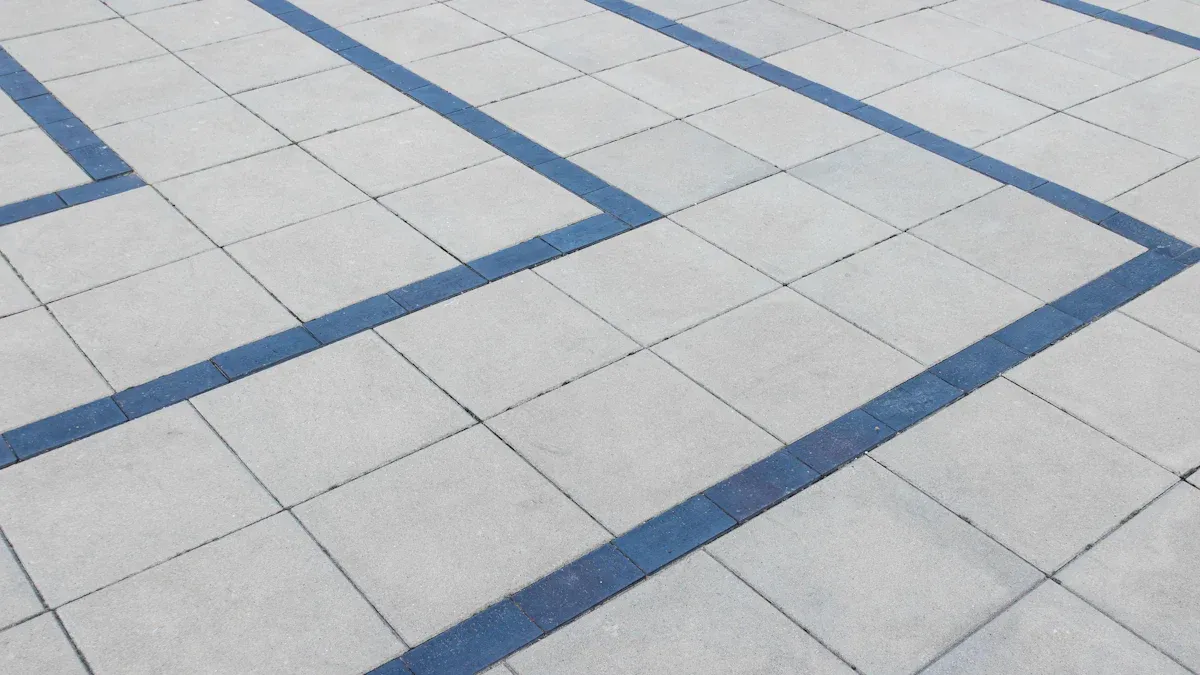
When you start planning your tiling project, you probably wonder how many plain tiles per metre squared you need. Most people use standard tile sizes, which makes things easier. The most common size for plain tiles is 265mm x 165mm. You will find other sizes too, like 300mm x 200mm or 150mm x 150mm. Each size changes the answer to how many plain tiles per metre squared you need.
Here's a quick look at some popular tile sizes and how many you need for one square meter:
Tile Size (mm) | Tiles per m² |
|---|---|
265 x 165 | 60 |
300 x 200 | 55 |
150 x 150 | 44 |
100 x 100 | 100 |
Tip: Always check the box or product details for the exact size. Manufacturers sometimes round the numbers.
You can figure out how many plain tiles per metre squared you need with a simple formula. You don't need fancy math skills. You just need to know the size of your tile and the area you want to cover.
Here's the step-by-step method:
Find the area of one tile
Measure the length and width of your tile in millimeters. Multiply them together to get the area in square millimeters.
Convert to square meters
Divide the area of one tile by 1,000,000. This gives you the area in square meters.
Calculate how many tiles fit in one square meter
Divide 1 by the area of one tile (in square meters). This tells you how many plain tiles per metre squared you need.
Here's the formula in a code block for easy reference:
Number of tiles per m² = 1 / (Tile length (m) x Tile width (m))
Let's use the 265mm x 165mm tile as an example:
Tile area: 265mm x 165mm = 43,725 mm²
Convert to m²: 43,725 ÷ 1,000,000 = 0.043725 m²
Tiles per m²: 1 ÷ 0.043725 ≈ 22.87
Wait, that seems off! Why do you see 60 tiles per m² in the table? That's because you need to convert millimeters to meters before multiplying:
Tile length: 265mm = 0.265m
Tile width: 165mm = 0.165m
Tile area: 0.265m x 0.165m = 0.043725 m²
Tiles per m²: 1 ÷ 0.043725 ≈ 22.87
Actually, the correct number is about 23 tiles per m². Some manufacturers include grout gaps or round up for packaging. Always check the product details and do your own calculation to be sure.
Note: If you use smaller tiles, you will need more plain tiles per metre squared. Larger tiles mean fewer tiles for the same area.
If you want to know how many plain tiles per metre squared for your specific tile, just plug your numbers into the formula. You can use a calculator or even a spreadsheet.
When you start calculating plain tiles for your project, you might notice that the number of tiles needed can change. Several things can affect how many tiles per sq metre you will actually use. Let's look at the main factors.
Tile size makes a big difference in the number of tiles needed. If you pick large tiles, you will need fewer tiles per square meter. Small tiles mean you need more to cover the same space. For example, a 100mm x 100mm tile will need about 100 tiles per mtr2, but a 300mm x 200mm tile will only need about 55. Always check the size before you start calculating plain tiles per square meter.
Grout lines are the spaces between your tiles. You might think they do not matter much, but they can change your tile quantities. Wider grout lines mean you need fewer tiles because the gaps take up more space. If you use thin grout lines, you will need more tiles to fill the area. When calculating plain tiles, always include the width of your grout lines in your plan.
Tip: Use a tile spacer to keep grout lines even. This helps you get a neat finish and makes it easier to figure out the number of tiles needed.
The way you lay your tiles also affects the number of tiles needed. If you use a straight pattern, you might waste less. If you choose a diagonal or herringbone pattern, you will need to cut more tiles, which leads to more wastage. Irregular spaces, corners, and edges can also increase the number of tiles needed. Always add extra tiles for mistakes or breakage. Most people add 5-10% more tiles per m2 to be safe.
Note: Planning for wastage saves you from running out of tiles later. It is better to have a few extra plain tiles than not enough.

You want to know how many plain tiles you need for your project. Start by measuring the room. Use a tape measure to get the length and width of the area you want to tile. Write down these measurements. If your space is not a perfect rectangle, break it into smaller sections and measure each one. Add the numbers together to calculate the area. This step helps you get accurate measurements and makes tile quantity calculations easier.
Next, check the size of your tile. Look at the box or use a ruler to find the length and width. Write down these measurements too. You need both the room size and tile size for the next step.
Now you can calculate the number of tiles. Here's a simple way to do it:
Calculate the area of your room in square meters.
Find the area of one tile in square meters.
Divide the room area by the tile area.
Here's a quick example using a 265mm x 165mm tile:
Room size: 3m x 2m = 6m²
Tile size: 0.265m x 0.165m = 0.043725m²
Number of tiles: 6 ÷ 0.043725 ≈ 137 tiles
You can use this method for any tile size. This calculation helps you figure out how many tiles are needed for your space. If you want to calculate tiles per metre squared, just use 1m² instead of your room size.
Number of tiles = Room area (m²) ÷ Tile area (m²)
Tile coverage is not always perfect. You might break a tile or need to cut some for corners. To make sure you have enough, add extra tiles. Most people add 5-10% more to their total. This step makes your tile quantity calculations more reliable.
Here's how to calculate the number of tiles with wastage:
Total tiles needed: 137
Add 10% for wastage: 137 x 1.10 = 151 tiles
Tip: Always round up when you calculate the number of tiles. It's better to have a few left over than to run short.
If you follow these steps, you will know how to calculate tiles needed for any project. You can use these tile quantity calculations for kitchens, bathrooms, or any space. Accurate measurements and careful calculation give you the best results for tile coverage.
You can figure out how many tiles you need by checking your roof tile sizes and using the formula. Look at the table for quick answers. Always measure your space and tile before you start. Double-check your roof tile sizes to avoid mistakes. Add extra tiles for wastage. If you have a tricky layout or want advice on roof tile size and type, talk to a professional. Picking the right roof tile sizes makes your project easier and helps you get great results.
You measure your space and check your tile size. Divide one by the tile area to get the number of tiles per square meter. This method works for any tile type.
Yes! If you pick square tiles, you get a simple calculation. Odd shapes or patterns can change the number of tiles per square meter. Always check your layout before you buy.
You should always add 5-10% more tiles per square meter. This covers mistakes, cuts, and breakage. You will avoid running out of tiles during your project.
You need to check your roof tile size and layout. Most roofs use about 60 tiles per square meter, but this can change. Always measure your roof and check with your supplier.
The answer depends on the tile size. For example, you may need 100 small tiles or 55 large tiles per square meter. Always use the formula to find out how many roof tiles per square metre you need.
Tip: Always double-check your measurements before you order tiles. This saves you time and money.
